LAWSON OYEKAN
↓
LAWSON OYEKAN
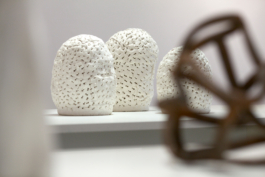
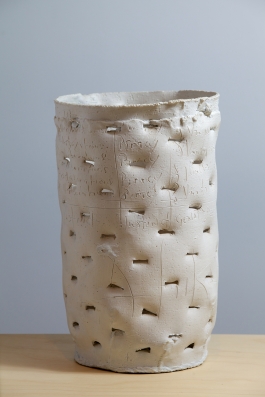
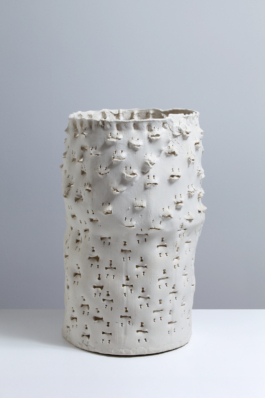
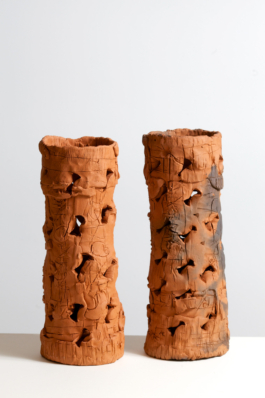
Lawson Oyekan, Porcelain group for Mixed Display exhibition (2014)
Lawson Oyekan, White Eben (2016)
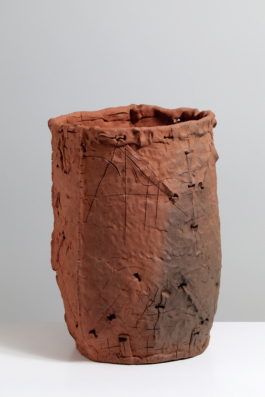
Lawson Oyekan, Vessel from the Body Undivided series (c.1998)
Lawson Oyekan, Body Undivided (white) (2014)
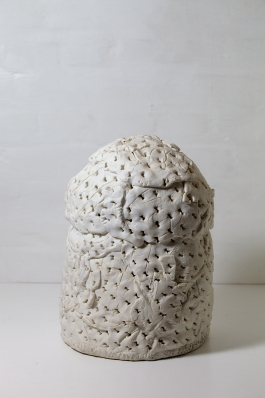
Lawson Oyekan, Porcelain Body Undivided (large) (2014)
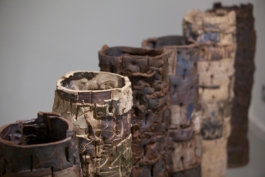
Lawson Oyekan, Bonnie Charlie (2015)
A recurrent theme in the work of Lawson Oyekan is the physical drama of nature’s complexity and his monumental ceramic installations are usually the result of an encounter with a particular place. Oyekan's imposing compositions celebrate the power of nature to inspire contemplation, renewal and transformation, whilst also reflecting his concerns about its destruction as a result of human foibles.
The notes of the Scottish folk song Bonnie Charlie came to his mind during his first visit to La Fontenelle Military Cemetery in Ban-de-Sapt, France. The artist was deeply affected by the graves marked ‘inconnu’ or unknown, which led to the creation of his piece Bonnie Charlie. ‘I then wondered if the ‘Inconnu’ mark represents a place of mass-interment of unvalued bodies, whose identities became cynically overlooked. The work, therefore, embodies the idea of the precarity of truth, deficits of empathy. And transformation.’ – Lawson Oyekan
Oyekan was born in London but grew up in Nigeria until he returned to England to study at Central St Martin’s and The Royal College of Art. Oyekan has exhibited nationally and internationally, winning the grand prize at the First World Ceramic Biennale in South Korea. He has participated in residencies at the Northern Clay Centre, Minneapolis, USA, The Portland Sculpture and Quarry Trust, Dorset, UK, Maryland Institute of Art, Baltimore.
Online exhibitions
Highlights from our Showroom
LAWSON OYEKAN
Lawson Oyekan, Porcelain group for Mixed Display exhibition (2014)
Lawson Oyekan, White Eben (2016)
Lawson Oyekan, Vessel from the Body Undivided series (c.1998)
Lawson Oyekan, Body Undivided (white) (2014)
Lawson Oyekan, Porcelain Body Undivided (large) (2014)
Lawson Oyekan, Bonnie Charlie (2015)
A recurrent theme in the work of Lawson Oyekan is the physical drama of nature’s complexity and his monumental ceramic installations are usually the result of an encounter with a particular place. Oyekan's imposing compositions celebrate the power of nature to inspire contemplation, renewal and transformation, whilst also reflecting his concerns about its destruction as a result of human foibles.
The notes of the Scottish folk song Bonnie Charlie came to his mind during his first visit to La Fontenelle Military Cemetery in Ban-de-Sapt, France. The artist was deeply affected by the graves marked ‘inconnu’ or unknown, which led to the creation of his piece Bonnie Charlie. ‘I then wondered if the ‘Inconnu’ mark represents a place of mass-interment of unvalued bodies, whose identities became cynically overlooked. The work, therefore, embodies the idea of the precarity of truth, deficits of empathy. And transformation.’ – Lawson Oyekan
Oyekan was born in London but grew up in Nigeria until he returned to England to study at Central St Martin’s and The Royal College of Art. Oyekan has exhibited nationally and internationally, winning the grand prize at the First World Ceramic Biennale in South Korea. He has participated in residencies at the Northern Clay Centre, Minneapolis, USA, The Portland Sculpture and Quarry Trust, Dorset, UK, Maryland Institute of Art, Baltimore.
Online exhibitions
Highlights from our Showroom
MARSDEN WOO
All photography © Philip Sayer unless otherwise attributed.
This site contains images of work protected by copyright. We do not consent to reproduction or use of any images without our consent including for the purposes of AI training.
MARSDEN WOO
info@marsdenwoo.com
i @marsden_woo
Subscribe to our mailing list
All photography © Philip Sayer unless otherwise attributed.
This site contains images of work protected by copyright. We do not consent to reproduction or use of any images without our consent including for the purposes of AI training.